Twenty years ago today, on January 25, 2005, my car was totaled in a crash thanks to a truck t-boning me (pulling out before I had time to stop aka they were at fault). It was a return to be car-free for me. For 15.75 years, I did not own a car. In January of 2016, weeks after starting this blog, I began a series of annual posts with 11 Years not a Slave to Cars. Then, in August of 2020, during the COVID-19 pandemic, I was gifted a car, which I wrote about January of 2021 in Come to the Dark Side, Dude: Where’s My Car?.
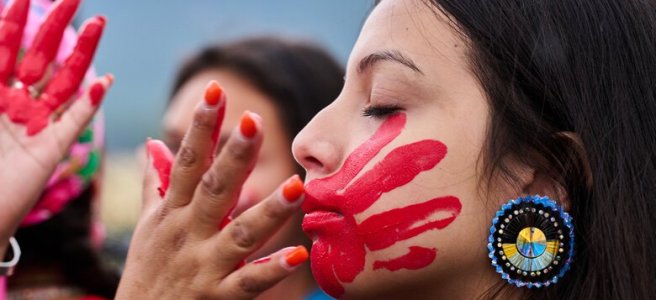
My last post was a mashup: a rant about commercialism and the whitewashing of the true history of Thanksgiving but also the good part of the holiday (gratitude). In keeping with that (Great) spirit and my belief that racism is you know, like, bad (der), it’s time to celebrate the next in a series mentioning the obvious but overlooked fact. That is, that people of color ride bikes just like this and many other white dudes and dudettes. We’ve taken a look at cycling in the Asian, Latino/a, and African American cultures, now it’s time for Americas First Peoples. Disclaimer: I’m a white person, and I’m not attempting to speak for anyone except myself. But I learned a lot researching this, and hopefully you will, too.
With President Joe Biden’s declaration of June 19 — Juneteenth, the day slaves in Galveston, Texas received the news two years AFTER the Emancipation Proclamation — as the newest United States federal holiday fresh on our minds, over 500 of Austin’s stalwart riders joined at the Texas State Capitol African American Historical Memorial for a Black history bike ride around north central Austin, Texas. Your reporter was there, braving the heat and sweatin’ to the oldies with everyone else. Compared to last year during the protests over the police killings of George Floyd, Breonna Taylor and others, there were a few less people. But it was still a huge crowd, and it’s a real pleasure to take over many city blocks of streets, in a huge crowd of bicycles, as far as the eye can see. Here’s my report.
Last night I found three free things on my 23-mile bicycle foray around north central Austin, Texas. Well, technically six things, or 15 if you really want to split hairs. I’m calling it three.
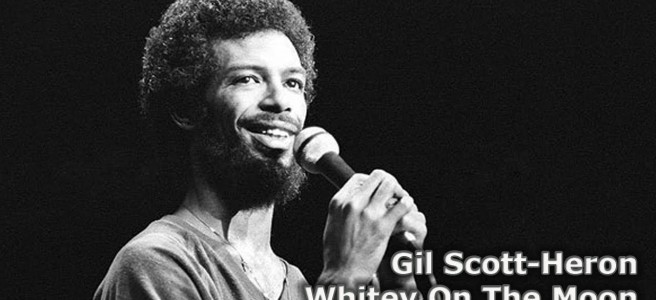
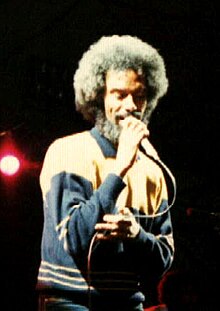
A year and two weeks ago, I wrote Snow in Austin, Winter in America, based on a powerful song by Gil Scott-Heron. I think that post is some of my best work, not necessarily prize-winning, but in trying to capture a mood. (You should go read it now. I’ll wait.) The street poet, progenitor of rap, musician, and author was a voice of conscience regarding the state of Black people in America, among other things. He could also lay down some serious grooves to go with his strong words; Winter in America is in a minor key and has a great blues flute solo. I wrote that post right before coronavirus began its whirlwind tour of the US — just before it went viral. (Ha!) It was a few months before the modern-day lynching of George Floyd on May 25, 2020. (Not ha.) Scott-Heron died on May 27, 2011, a decade ago later this year. What would he have to say about Floyd’s killer, Minneapolis policeman Derek Chauvin still being out on bail awaiting trial and maybe even getting some justice for George (yeah, we’ll see about that)? Time marches on. But as Sting once sang,“History will teach us nothing.” The prophetic music and lyrics of Scott-Heron and others like him (Marvin Gaye comes to mind) are relevant — still. Maybe in GSH’s poetry we can find a little solace in these cold and dark days. Or maybe we’ll get pissed and take action somehow. It is Black History Month, but is there more to it than history?
April 4, 2018 marks 50 years from when The Reverend Doctor Martin Luther King Junior was assassinated by a racist.Imagine how different the world might be if he were allowed to live. The movement to end the US war on Vietnam, the Poor People’s Campaign, the overall condition of African-Americans in the US, and many more were issues he advanced, making life better for all of us; they all could have progressed further much had he not been killed.
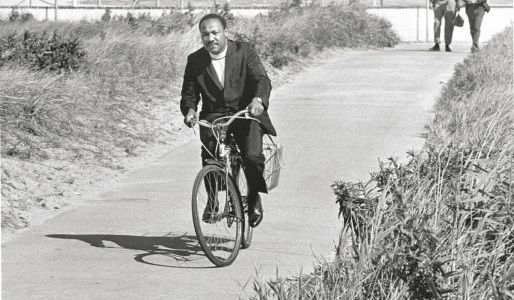
How much more could he have accomplished? Lives saved? Dignity restored? Barriers broken down? It breaks my heart to think these thoughts and to write these words. As well it should. We lost a true American hero that day. But to cheer us up, here is a picture of him on a bicycle a year before his death, yes, riding a bicycle on Fire Island. A Dude can link ANYTHING to bicycling.


 A Dude Abikes